
Building an RPG for the Phone Screen
September 23–28: Rebuilt the interface around landscape play and added tools for shaping the world directly by touch.
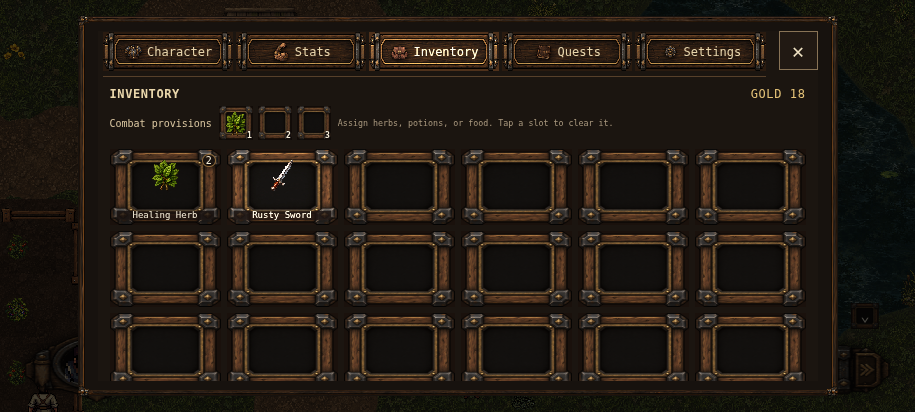
The first graphical bottom HUD and backpack evolved into framed character and dialogue menus, equipment slots, clearer experience and health displays, and an updated quest journal. Numerous tweaks to icon placement, meter widths and portraits were not separate features; they were steps toward making a dense RPG readable on a small landscape screen.
We also built early in-game prop and map editors. Instead of guessing coordinates in code, the team could move and size buildings, furniture and nature elements through touch controls, adjust collision settings and save the resulting layouts into the authored world.
Together, these changes established two important foundations: more usable player-facing menus and a faster way to keep improving the handcrafted maps.